Every day, thousands of road accidents are reported across India. Property damage, vehicle repair costs, injuries, and legal liability, the financial consequences of an accident can run into lakhs of rupees. Yet many vehicle owners in India carry only the minimum required coverage without understanding what it actually protects, and what it does not.
The Law: Third-Party Insurance Is Mandatory
Under the Motor Vehicles Act, 1988, all vehicles used on public roads in India must have at least third-party liability insurance. Driving without valid insurance is a punishable offence. Despite this, a significant number of vehicles in India remain uninsured or have lapsed policies, leaving their owners financially exposed.
What Is Third-Party Motor Insurance?
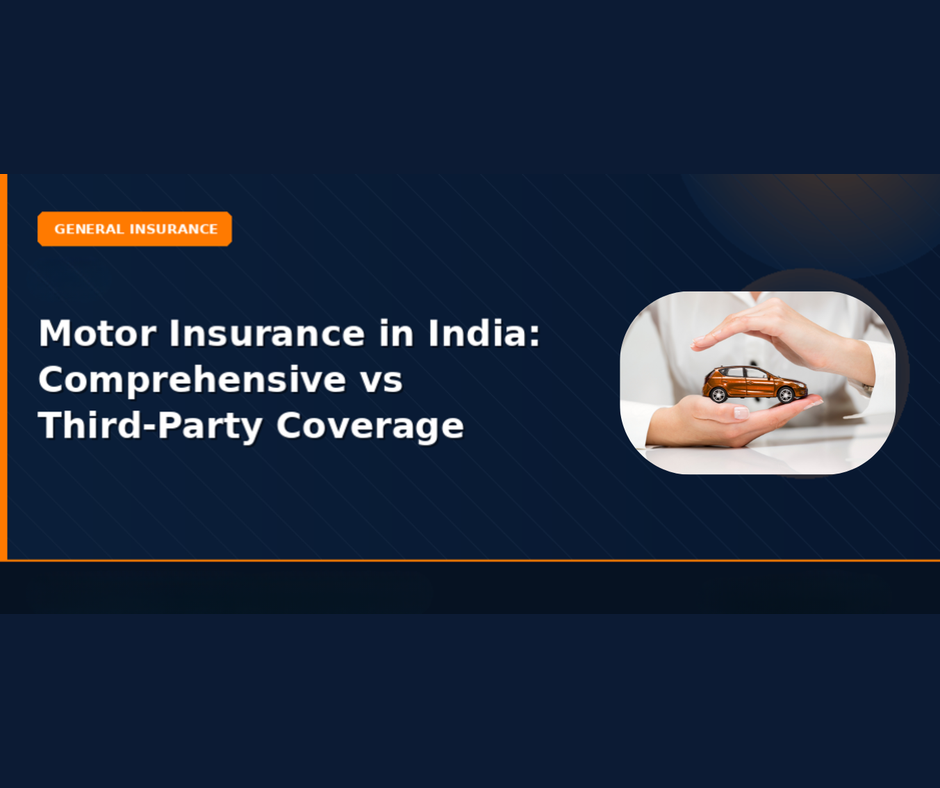
Third-party motor insurance provides coverage for legal liability arising from an accident involving your vehicle, specifically for injury, death, or property damage caused to a third party (any person or property other than the policyholder and their vehicle). If you are involved in an accident that injures another person or damages their property, your third-party insurance covers the compensation you are legally required to pay.
What third-party insurance does NOT cover: any damage to your own vehicle, theft of your own vehicle, or personal injury to yourself.
What Is Comprehensive Motor Insurance?
A comprehensive motor insurance policy includes the third-party liability cover (which is mandatory) and adds own-damage cover, protection for physical damage to your own vehicle due to accidents, fire, natural calamities like floods, storms, and earthquakes, theft, vandalism, and other specified perils.
Comprehensive policies can also be enhanced with add-ons such as zero depreciation cover, engine protection, return to invoice cover, roadside assistance, and consumables cover, which reduce out-of-pocket expenses significantly in the event of a claim.
Key Differences at a Glance
- Own vehicle damage: Not covered under third-party; covered under comprehensive.
- Natural calamity damage: Not covered under third-party; can be covered under comprehensive.
- Theft: Not covered under third-party; covered under comprehensive.
- Premium: Third-party premiums are fixed by IRDAI. Comprehensive premiums are higher but offer significantly broader coverage.
Common Misconceptions
Many vehicle owners believe that third-party insurance is sufficient because it is legally mandated. In reality, if your own vehicle is damaged in an accident, flooded, or stolen, your third-party policy provides no compensation. The financial burden of repairing or replacing your vehicle falls entirely on you.
Another common misconception is that depreciation on vehicle parts is fully covered. Under standard comprehensive policies, insurers may deduct depreciation on replaced parts at the time of claim. The zero depreciation add-on, where available, helps reduce this deduction, but it comes at an additional premium and has its own terms and conditions.
No-Claims Bonus: Worth Protecting
Always renew your motor insurance before the expiry date. A lapsed policy means you lose no-claims bonus (NCB) benefits, which can substantially reduce your premium over time. NCB is a discount offered for each claim-free year and can accumulate to a significant percentage of the own-damage premium.
The Bottom Line
Third-party insurance keeps you legal. Comprehensive insurance keeps you protected. For most vehicle owners, particularly those with newer or financed vehicles, a comprehensive policy with relevant add-ons may provide better financial security and peace of mind.
Please review all policy terms, coverage details, exclusions, and add-on conditions carefully. Premiums and terms vary by insurer, vehicle type, and location. Consult a qualified advisor for guidance suited to your situation.
NavNirvana IMF – Drive with confidence. Drive with the right cover.
| About the Author Nirmal Jain is the Managing Director of NavNirvana IMF Pvt Ltd, an IRDAI-registered Insurance Marketing Firm. With deep expertise in the BFSI sector, he is committed to simplifying insurance concepts and helping Indian families and businesses make informed financial protection decisions. Visit: www.navnirvana.com for more insurance education resources. |